Our first project is 15 public schools in Osun State. Details will be published once the State has given consent and assessments are done.
A major campaign goal · Africa
Free education, from pre-K through high school
One of our major goals is to establish a free education system across Africa, from pre-K through high school. We aim to make quality education accessible without tuition fees, beginning with plans to renovate public schools in Nigeria. This is a goal in development, not an already operating education system.
Individual school names are withheld pending the Governor's consent. School plans, real visit photos and builder quotes will be added once consent is given and assessments are done.
Give $1 to a schoolWhat it costs — estimate
Based on published government figures, not our own quotes. A 2024 federal budget line set aside ₦25,000,000 to renovate and furnish one block of 4 classrooms (source) — about ₦6,250,000 per classroom. Dollar figures use ₦1,550 = $1. Real costs will differ by state and are replaced with builders' quotes after each site visit.
This calculator covers classroom renovation and furnishing only, using the historical 4-classroom benchmark. It does not price the 6-classroom concept, computer or science labs, toilets, water, or a complete school renovation. The Osun programme separately budgets $100,000 per school; final scopes and quotes follow assessment.
Estimated cost
₦25,000,000
In dollars
$16,129
$1 gifts needed
16,129
The national picture: Nigeria's basic education commission reports that about 40% of classrooms are in bad condition and that 907,769 more primary classrooms were needed as of 2022 (source). At the same estimate that would be roughly $4 billion — which is why we start one school at a time and keep education at those schools free.
The One Dollar World school standard
One design for every school we renovate
This is our concept design, not a finished building. The drawings and pictures show the future we are working toward. Real photos will be added after our team visits each school.
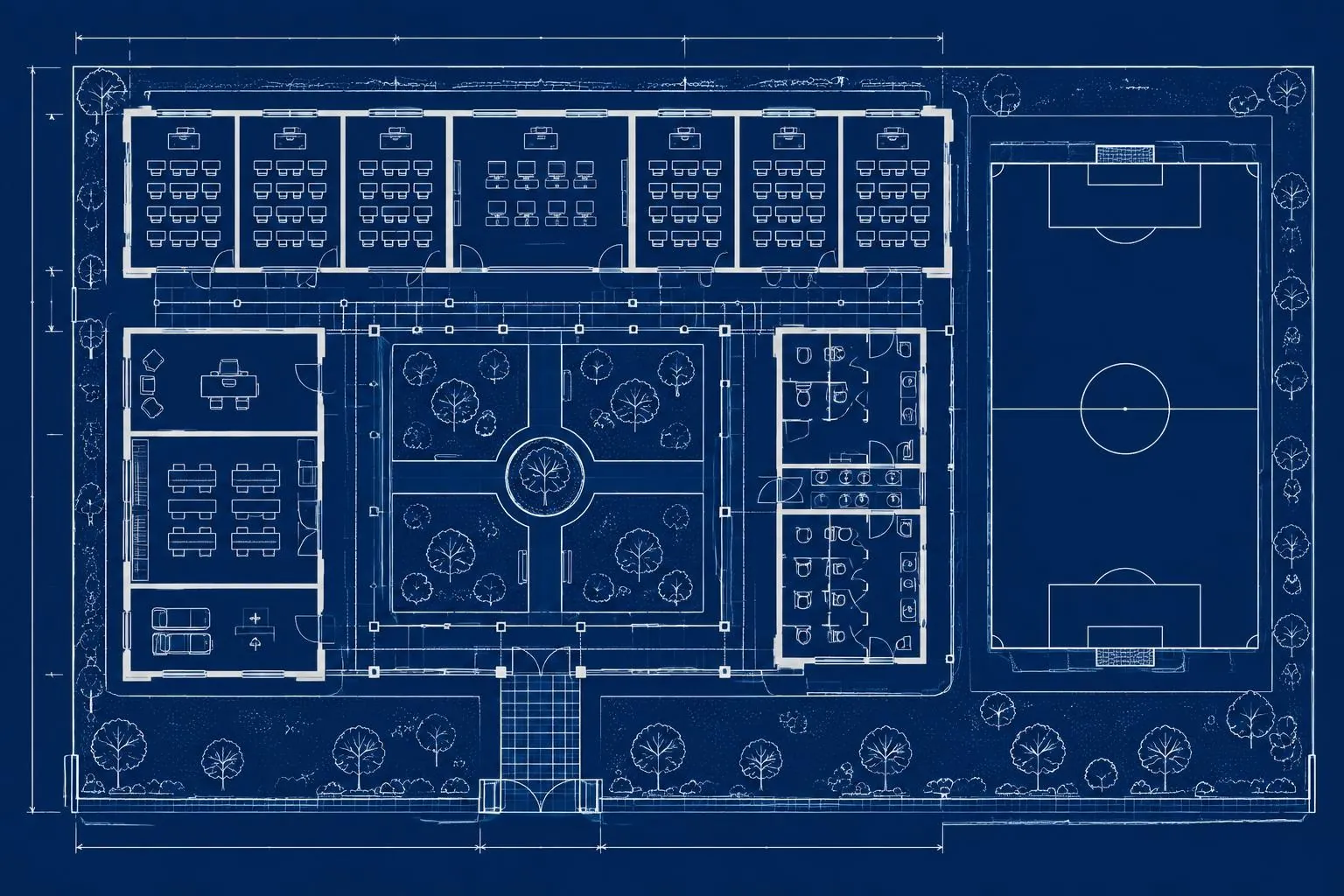
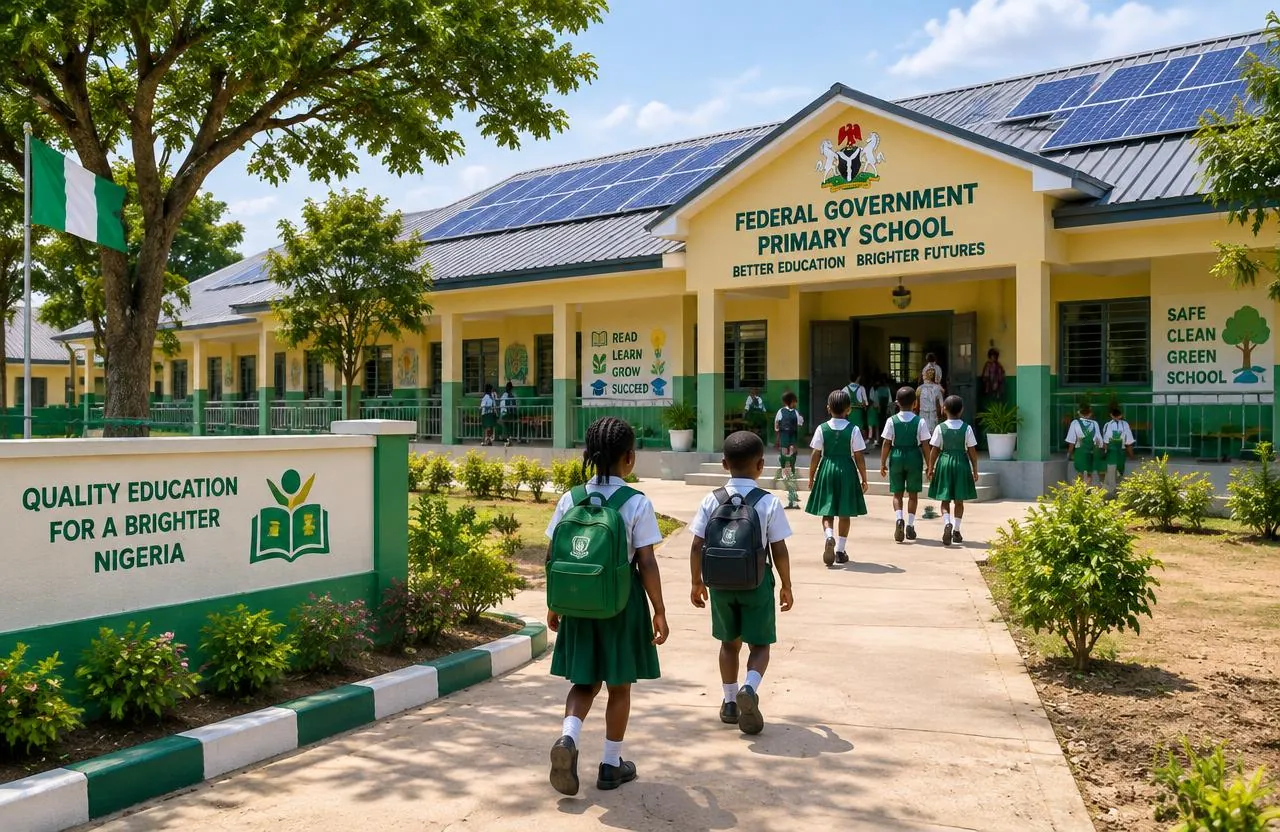
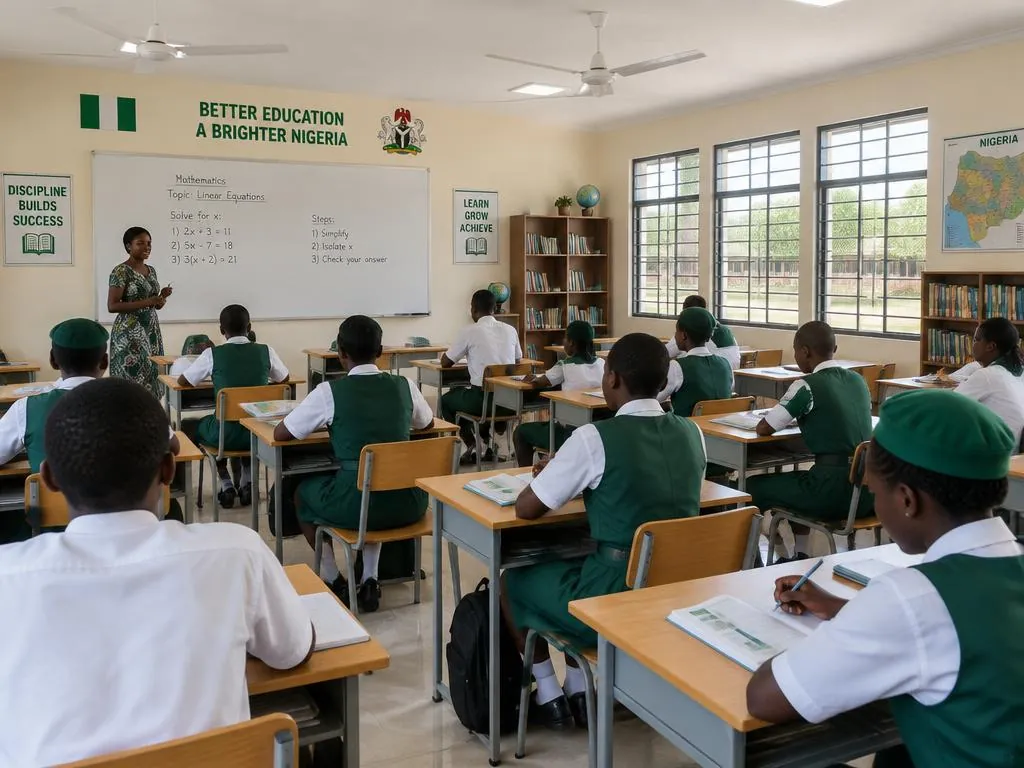
Classrooms
- • Max 40 pupils per room
- • Sturdy desk and chair for every child
- • Whiteboard, ceiling fans, large windows
- • Class library shelf
Illustration
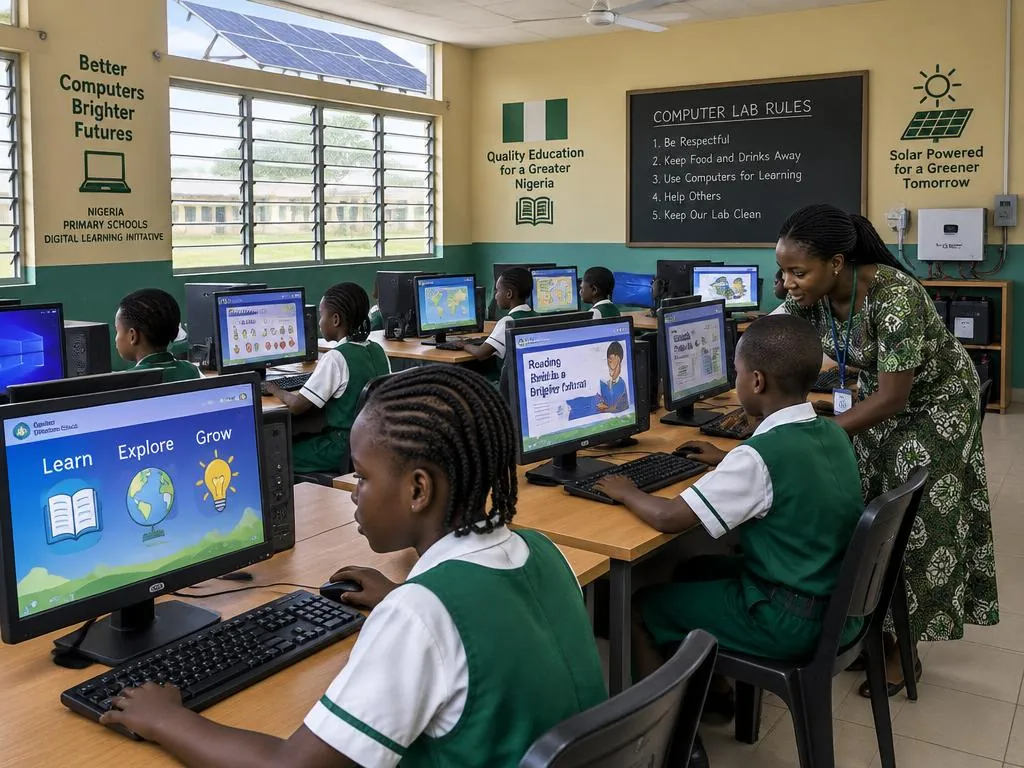
Computer lab
- • One computer per two pupils
- • Solar power with battery backup
- • Offline learning content + internet
- • Computer skills, coding and AI lessons
Illustration
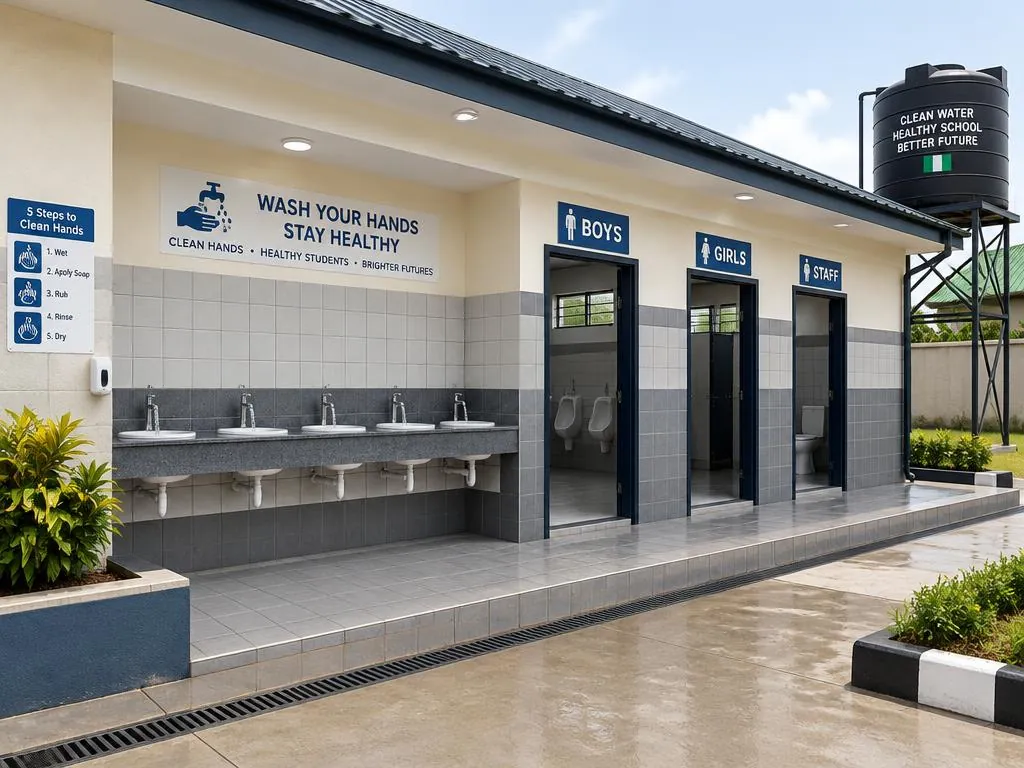
Restrooms & water
- • Separate boys, girls and staff toilets
- • Handwashing station with soap
- • Overhead water tank, borehole where needed
- • Daily cleaning rota
Illustration
Uniforms
Free uniform set per child each year: green and white shirt/dress, shoes, socks and school bag.
Books & meals
Free textbooks, exercise books and one hot meal a day.
Health corner
First-aid room with regular check-ups and health talks.
Sports field
Football pitch and play area for every school.
Power
Rooftop solar so lights, fans and computers keep running.
Safety
Perimeter fence, gate and covered walkways.
Computer skills & innovation
From first click to working ideas
Every school we renovate gets a computer lab. But a room full of computers is only the start. Our goal is to help children understand why technology matters in their education and their lives, and to give them the skills to turn their own ideas into real solutions. This is a planned programme for the 15 Osun State schools in our first project. It is not running yet.
What pupils will learn
Digital foundations
Using a computer with confidence: typing, saving and organising work, searching well, and staying safe and respectful online.
Coding and problem-solving
Breaking a problem into steps, then building simple programs, games and web pages, starting with block-based coding and moving on to real code.
AI and new technology
What artificial intelligence is, how to use it responsibly and how to check what it tells you.
Ideas into reality
In teams, pupils pick a real problem in their school or community, such as water, farming, health or the journey to school. They design a technology solution, take it from sketch to working prototype and present it to their community.
Technology in every subject
Computers used in maths, science and reading lessons, so technology supports everyday learning rather than one lesson a week.
Built to last
- • Teachers trained to lead every lesson, so learning doesn't depend on visitors.
- • Solar power with battery backup, plus offline learning content, so lessons continue through power cuts and without internet.
- • Girls and boys get equal time in the lab.
- • A maintenance and replacement plan for every lab.
How we'll report it
Once the labs open, the impact dashboard will show how many pupils complete each level, the share of girls taking part, teachers trained, projects built and how often each lab is used.
The four levels: Level 1 · Digital foundations, Level 2 · Coding and problem-solving, Level 3 · AI and new technology, Level 4 · Ideas into reality (team project).
Pupils completing each level
Number of pupils who complete each of the four levels, and that number as a share of pupils enrolled at that level.
- What counts
- A pupil completes a level when they pass its end-of-level practical task, assessed by their trained teacher.
- Recorded in
- Class register and the teacher's end-of-level task record.
- How we check
- Our team re-marks a sample of tasks at each school visit.
Girls' participation
Share of enrolled pupils who are girls, share of lab hours used by girls, and share of level completions by girls.
- What counts
- Counted from the same register and lab log as everyone else, split by girls and boys.
- Recorded in
- Class register and lab sign-in log.
- How we check
- Compared with the school's overall enrolment, and with timetabled lab time at each visit.
Teachers trained
Number of teachers at each school who finish the programme's teacher training and are able to lead lessons on their own.
- What counts
- A teacher counts once they complete the training and lead an observed lesson.
- Recorded in
- Training attendance records and lesson observation notes.
- How we check
- Our team observes a lesson at each school visit.
Projects built
Number of pupil team projects that reach a working prototype, with the real school or community problem each one tackles.
- What counts
- A project counts when the team shows it working at its community presentation.
- Recorded in
- Project log with a short description and photos (shared only with consent).
- How we check
- Presentations are attended by school staff and, where possible, our team.
Lab usage
Hours each lab is used for lessons per week, share of timetabled lab lessons that actually took place, and computers in working order.
- What counts
- A lesson counts when it is logged in the lab sign-in log, including during power cuts on solar backup.
- Recorded in
- Lab timetable, sign-in log and a termly equipment check.
- How we check
- Logs are compared with the timetable and the equipment is checked at each visit.
- • Reported per school, once per school term (the Nigerian school year runs from September to July in three terms).
- • Only totals are published. No pupil names, and no photos of children without consent.
- • Schools are shown by number until the State consents to publishing their names.
- • Nothing is shown until a lab is open; until then every measure reads "Not started".
Planned timeline
1. Now · 9 November 2026 – 9 November 2027
Fundraising year and partner talks
We are raising this fiscal year's goal for 15 Osun State schools and talking with technology partners. Lessons and these measures are being finalised.
2. When a school is fully funded
Site assessment and renovation
Each school starts once its US$100,000 budget is raised and the site is assessed. The renovation includes the computer lab, solar power with battery backup and offline content.
3. Before the lab opens
Teacher training
The school's teachers are trained to lead every lesson, so learning does not depend on visitors.
4. First school term after opening
Lab opens: Levels 1 and 2
Pupils begin with digital foundations, then coding and problem-solving. Lab usage and girls' participation are reported from the first term.
5. Following terms
Levels 3 and 4: AI and team projects
Pupils learn about AI and work in teams on a real school or community problem, ending with a community presentation of working prototypes.
6. Every term
Public reporting
Each school's results are published on the impact dashboard, along with how partner support was used.
No school, lab or lesson dates are confirmed yet. Dates are set for each school once it is funded and assessed, and will be published on the impact dashboard.
Partner with us
We welcome technology companies as partners, through grants, equipment, software, learning content and volunteer mentors. We will report on our public dashboard how partner support is used and what it achieves.
Grants
Fund a school's computer lab, solar power and maintenance, or the programme across all 15 schools.
Equipment
Computers, solar panels, batteries and networking, with a plan for repair and replacement.
Software
Licences for coding, design and learning tools that work offline.
Learning content
Offline lessons and materials for digital skills, coding and AI, suited to Nigerian classrooms.
Teacher training
Help design and deliver training so teachers can lead every lesson.
Volunteer mentors
Staff who mentor pupil teams, remotely or on visits, from first sketch to working prototype.